
01
0-6s
Cell state
Discrete manufacturing is framed through machine states before dashboards or platforms appear.
Automation and AI systems for discrete production lines, utilities, quality workflows, and maintenance teams.
Discrete manufacturing projects often fail when data stays trapped inside individual cells. The useful path connects machine events, quality context, and maintenance action without losing plant ownership.
Show how cell events, line state, quality context, utility load, and maintenance evidence converge into one operating model before improvement or AI work begins.
Discrete manufacturing is framed through machine states before dashboards or platforms appear.
Workpieces move through the cell, robot station, inspection gate, utility load, and critical asset.
Production, quality, utilities, and maintenance evidence are joined to the same event.
The event routes to operator, quality, maintenance, or engineering ownership.
Each problem maps to a core service or a public solution blueprint.
Production teams need reliable machine states, stop reasons, and output context before improvement discussions can become evidence-based.
Small stops and unclear machine states blur the difference between equipment, process, operator, and material losses.
Critical assets need condition signals and review bands that help maintenance choose inspect, watch, plan, or act.
Industrial AI should enter only after source data, review boundaries, and human approval points are clear.
The service list is a starting point for discovery, not a claim that every plant needs every layer.
Stabilise PLC logic, alarm quality, and HMI states on brownfield cells so a machine state means the same thing across shifts. Benchmarked against IEC 61131-3 and ISA-101 practice.
Join cell events, line state, and quality context into one model using OPC UA and ISA-95 conventions, so production and maintenance read from the same source of truth.
Apply vibration, temperature, and current signal stacks to the rotating assets that actually stop a line, framed by ISO 17359 condition-monitoring practice.
These articles support the public problem framing without presenting private plant results as case studies.
 IIoT
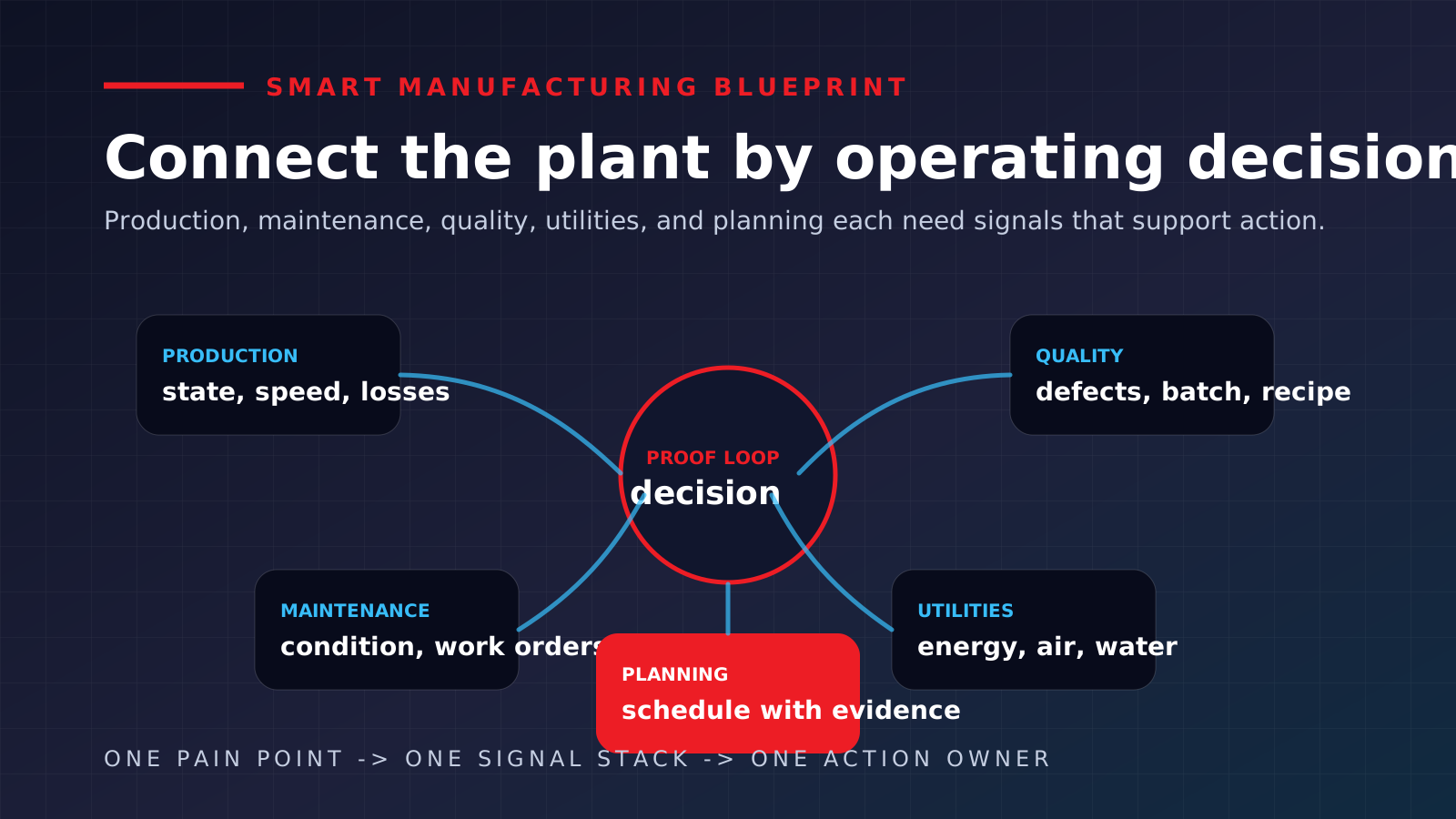
IIoT A grounded smart manufacturing blueprint for connecting production, maintenance, quality, utilities, and planning without overclaiming transformation.
 Industrial Automation
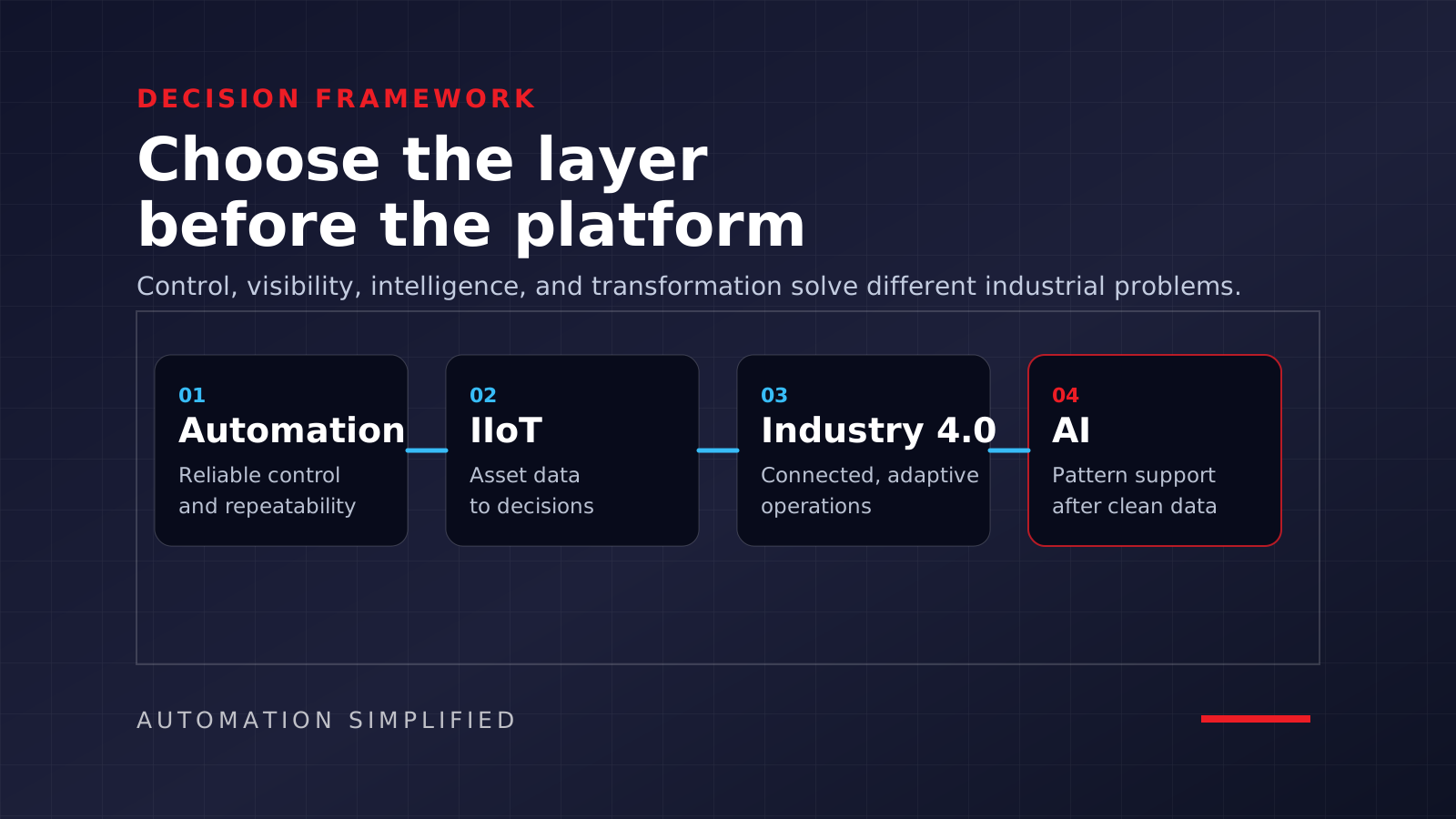
 A decision framework for industrial leaders who need to separate control, visibility, data, and transformation before committing capital.
 Industrial Automation
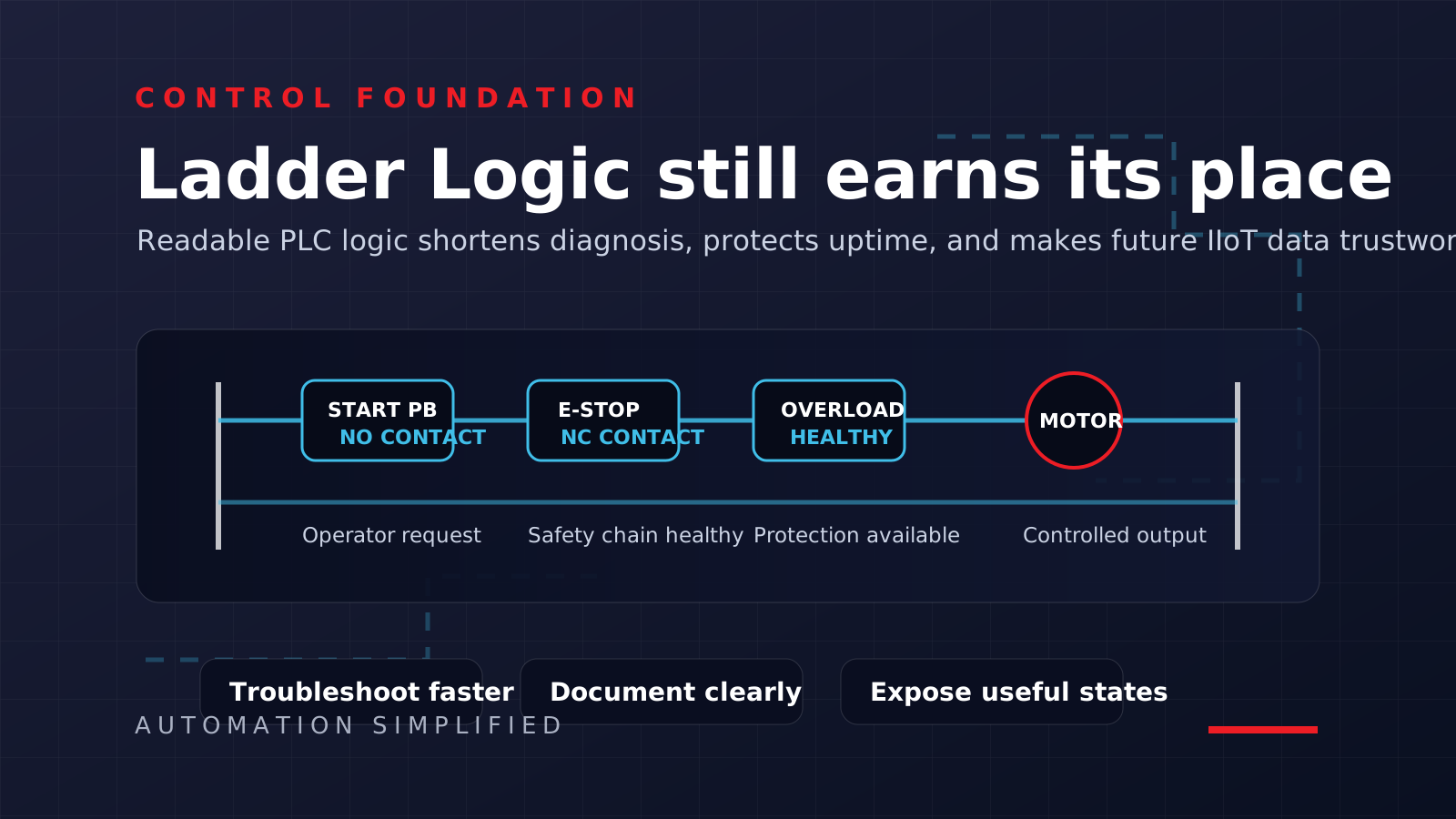
 A practical automation guide for leaders who need PLC logic, machine sequences, safety discipline, and future IIoT data to work as one operating system.
 IIoT
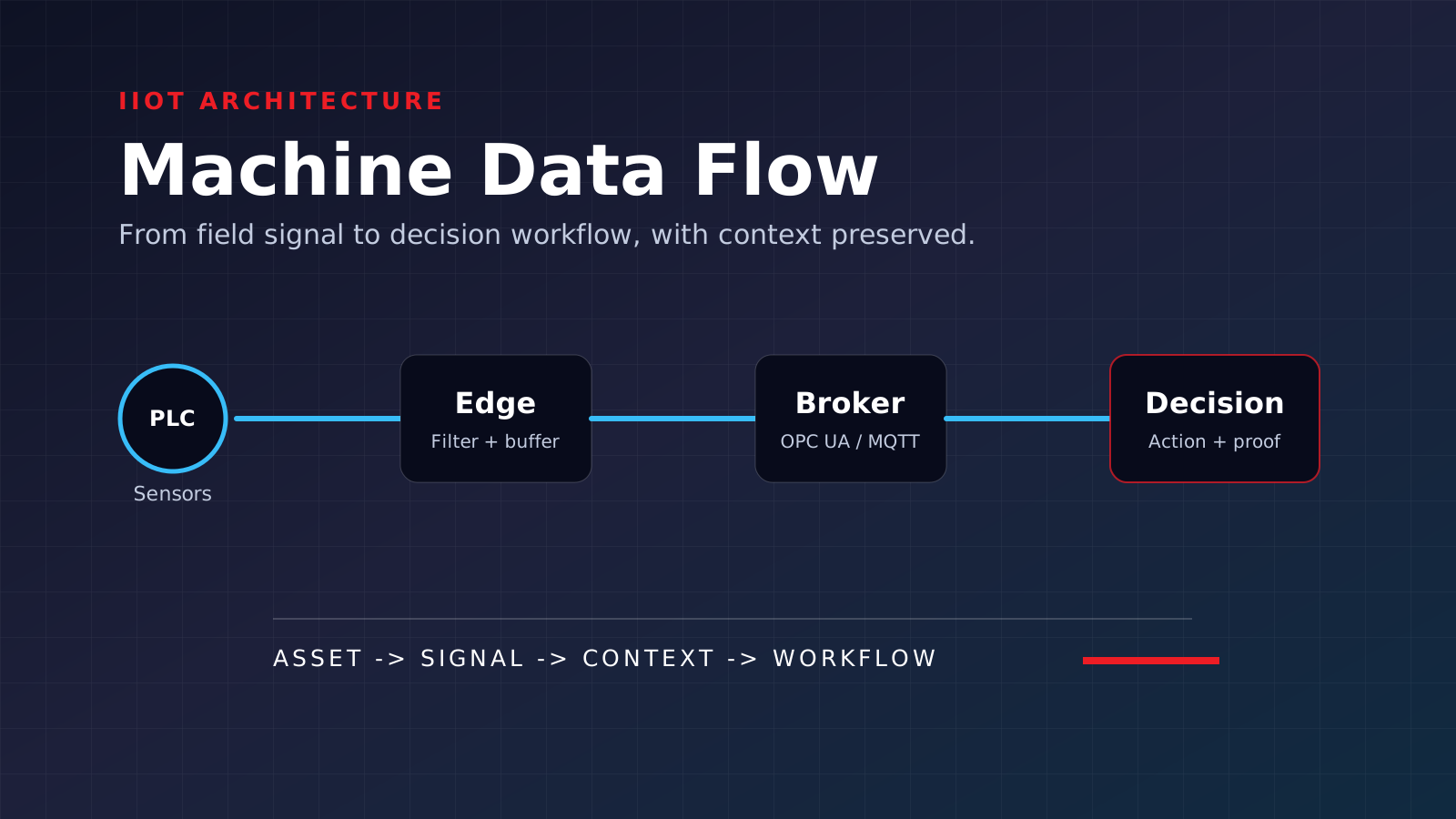
IIoT A refined IIoT architecture guide for turning machine signals, PLC data, and sensor context into decisions that improve uptime, maintenance, energy, and production confidence.
 IIoT
IIoT An engineer trends last night's pressure and sees a smooth line through the upset she knows happened. Nothing is broken and nothing was deleted. A compression deviation set to save disk in 2011 and a retrieval mode that paints straight lines through gaps did the rest.
 IIoT
IIoT Eight links carry a plant reading from a physical condition to somebody's judgement, and value is created at the last one only. Built forwards from the sensors, the chain produces a very complete record of nobody looking at anything.
 IIoT
IIoT A sensor is a claim about the future: that some decision, some day, will be made differently because this measurement exists. The claim is testable in minutes, before a single wire is run, and failing it on paper is free.
 IIoT
IIoT Six one-page cards for the records an industrial data project keeps skipping: the decision test, the load statement, the timestamp audit, the retrieval modes, the data contract and the chain health signals. Questions and record fields only.
These are the operating views worth clarifying when a plant wants to move from symptoms to evidence-backed action.
Captured with asset hierarchy, signal ownership, and the operating state that makes the reading meaningful.
Tied to a named decision owner and the action path the team can realistically follow.
Validated against existing PLC, historian, and maintenance evidence before new sensors are added.
Reviewed for data quality, units, and timestamp integrity so later analytics inherit clean context.
Start with the line, cell, asset, or utility decision where better evidence would change action fastest.