Practitioners Academy Academy (opens in a new tab) Book a Consultation
HomeServicesAutomation Reliability & Control Hygiene
Service

Automation Reliability & Control Hygiene

Controls, PLC/HMI state clarity, alarm quality, documentation, backups, panels, and commissioning discipline for maintainable automation.

Service promise

Stabilize the control layer so operators, maintenance, and engineering teams can understand machine state, recover faster, and modernize without hidden fragility.

Operators work around unclear HMI states, nuisance alarms, or manual recovery habits.
PLC logic, panels, backups, or documentation are difficult to trust during changes.
A control upgrade, line change, or IIoT rollout needs a cleaner foundation first.
Review a control reliability scope
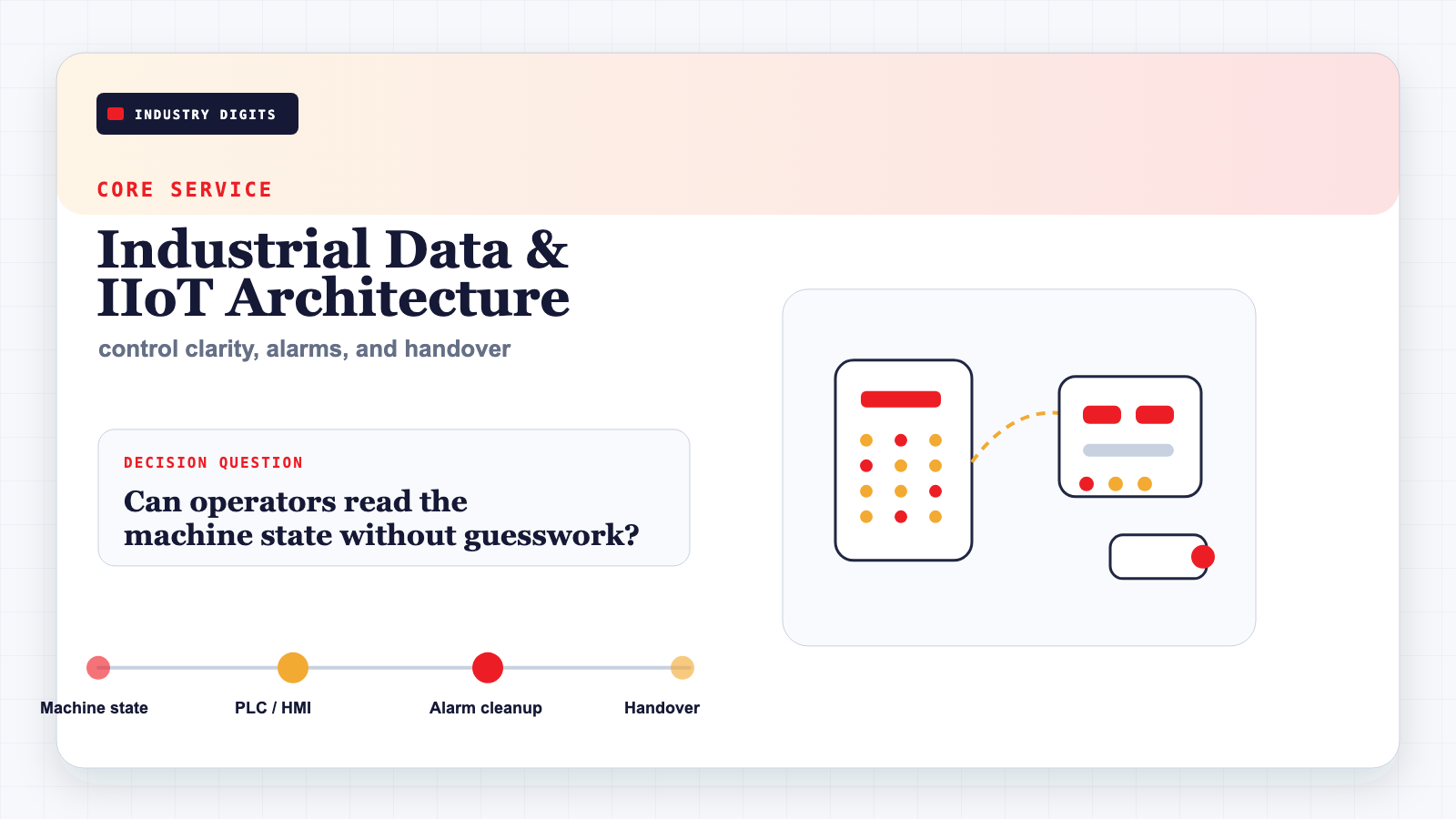
Wireframe-style control system scene showing PLC, HMI, alarms, actuator, and commissioning path
Implementation method

What we actually build and verify

Each service starts from a bounded operating decision, then defines the technical path needed to support it.

01

State model review

Map run, stop, hold, manual, fault, permissive, and recovery states so operator screens match the real machine.
02

Logic and alarm hygiene

Review PLC/HMI behavior, alarm priority, interlocks, cause text, reset behavior, and nuisance patterns as one operating system.

03

Control asset discipline

Check panels, I/O lists, backups, network notes, drawings, vendor constraints, and change records needed for safe maintenance.

04

Commissioning proof

Create test cases, rollback plan, owner sign-off, and handover notes that make future modifications less fragile.
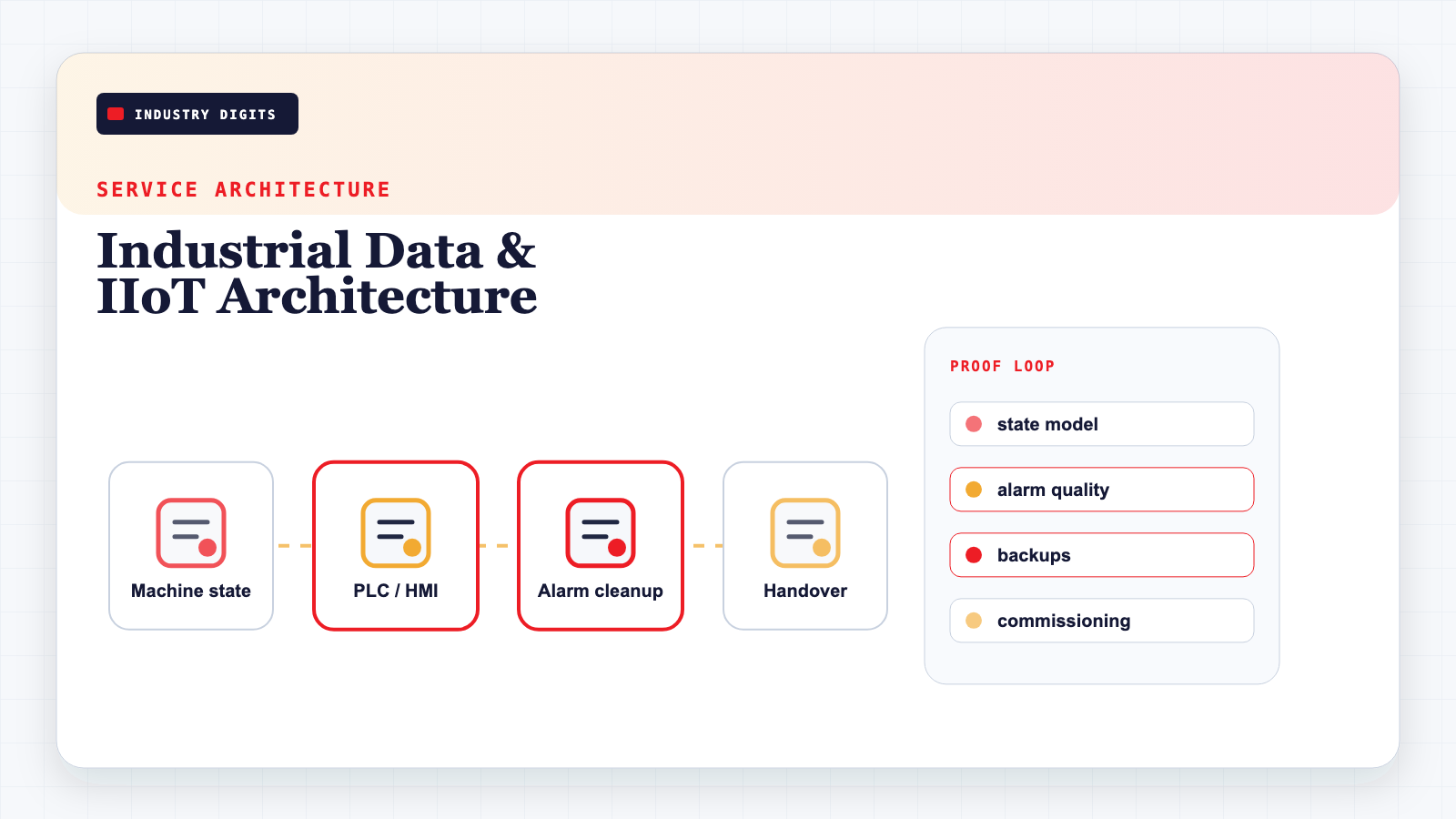
Automation reliability diagram showing machine state, PLC/HMI logic, alarms, backups, and commissioning handover
Evidence needed

Useful scope starts with field evidence.

Control logic PLC program structure, sequence notes, interlocks, permissives, HMI screens, alarm history, and known operator workarounds.
Field and panel context I/O list, instrumentation, panel layout, drive and actuator details, network devices, drawings, and backup status.
Operating pain points Common stoppages, manual resets, unclear states, nuisance alarms, slow recovery steps, and maintenance escalation history.
Change constraints Vendor access, warranty limits, downtime windows, validation needs, safety boundaries, and who accepts commissioning changes.
First engagement

A bounded pilot before a plant-wide program.

Start with one machine, line, panel, or control cell where reliability and handover matter.

Choose one machine or control cell Start with a bounded machine, station, panel, packaging cell, process unit, or utility control area.
Map states and alarms Document how the machine behaves, what operators see, and which alarms or messages drive action.
Clean the smallest reliable scope Improve naming, displays, alarm priority, backup discipline, or handover artifacts without turning the work into a risky rewrite.
Commission and hand over Verify behavior with operators and maintenance, then record the standard for the next machine or line.
Explainer video brief

Automation Reliability & Control Hygiene: Make Control State Trustworthy

Explain how stable automation starts with readable machine states, alarm quality, backups, documentation, and commissioning proof.

0-12s Unclear machine state

Reliability suffers when the control layer is hard to read.

12-28s PLC/HMI hygiene

Clean state logic reduces recovery confusion.

28-45s Panel and backup discipline

Documentation is reliability infrastructure.

45-65s Commissioned handover

A control change is complete only when the team can own it.

Related reading

Field guides that deepen this service

Standards-anchored articles on the methods this service uses — signal selection, thresholds, data paths, and the review workflows that turn evidence into action.
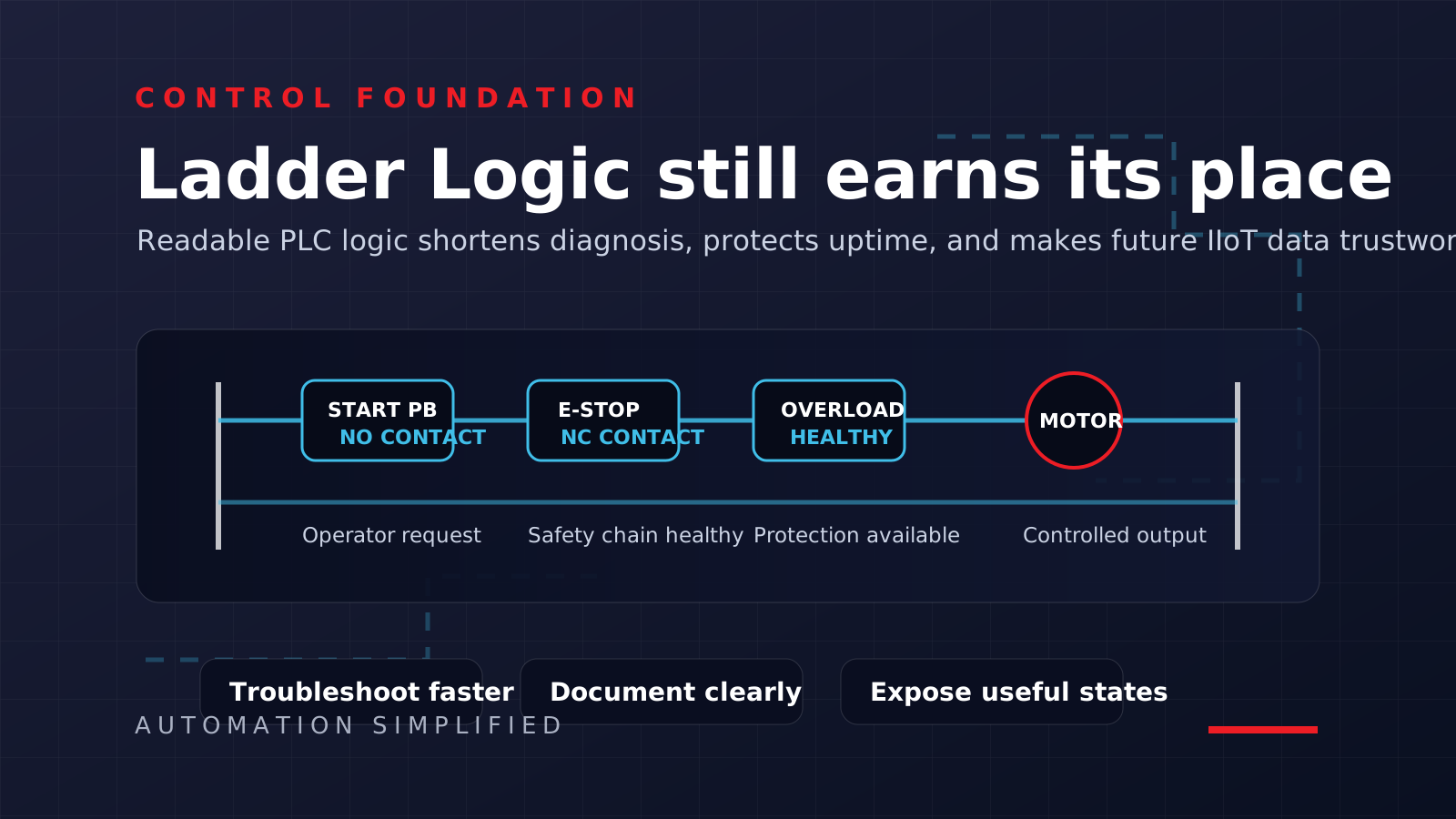
Ladder Logic control foundation showing readable PLC logic as a base for troubleshooting, documentation, and future data quality Industrial Automation

Ladder Logic Foundations: Why PLC Thinking Still Matters In Modern Automation

A practical automation guide for leaders who need PLC logic, machine sequences, safety discipline, and future IIoT data to work as one operating system.
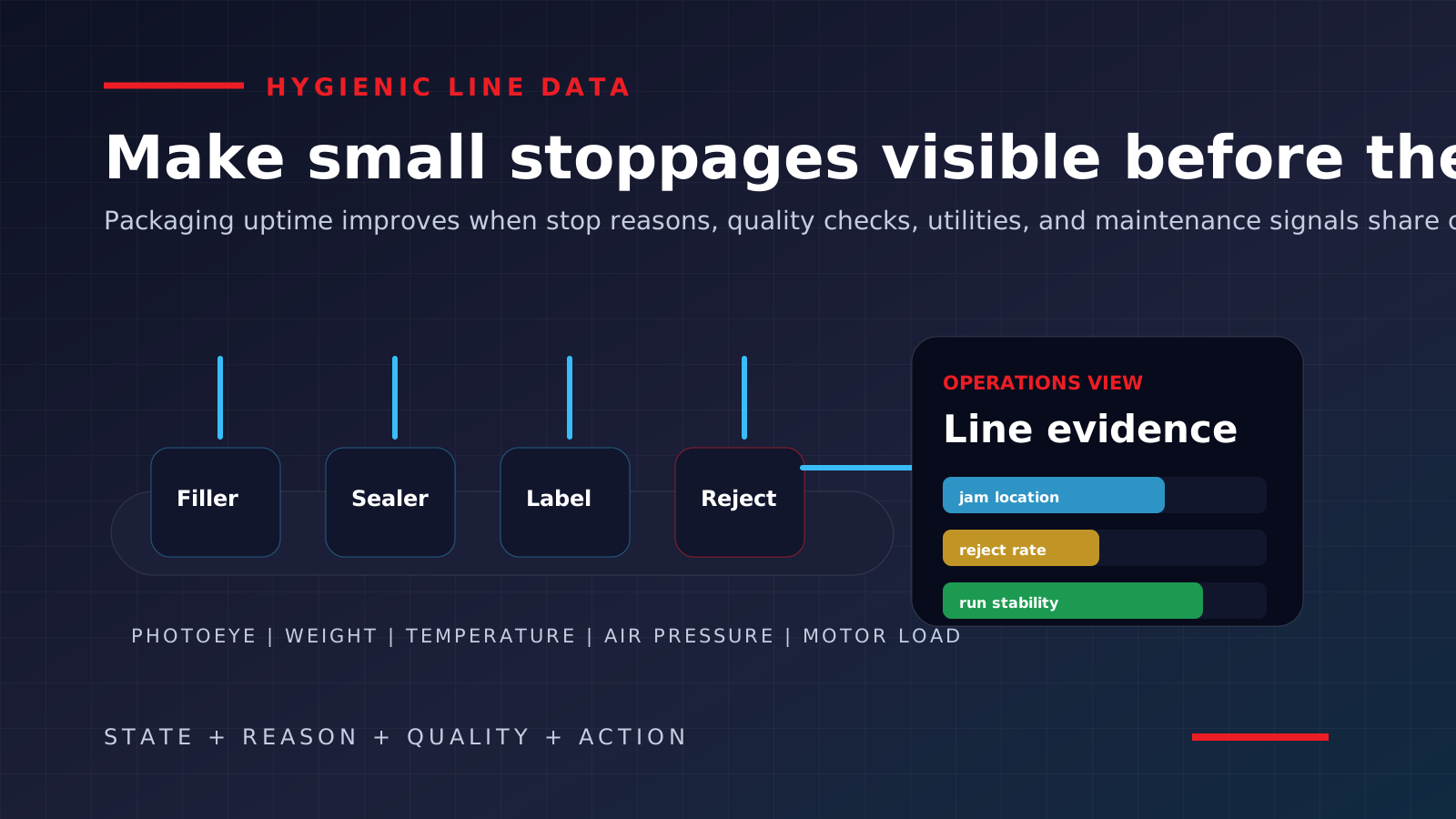
Food and beverage packaging line data flow diagram showing sensors, PLC states, quality checks, and dashboard evidence Industrial Automation

Food And Beverage Automation: Practical IIoT And Control Ideas For Hygienic Production Lines

How food and beverage plants can use automation, IIoT, and condition monitoring to improve uptime, hygiene, quality, and packaging reliability without overcomplicating operations.
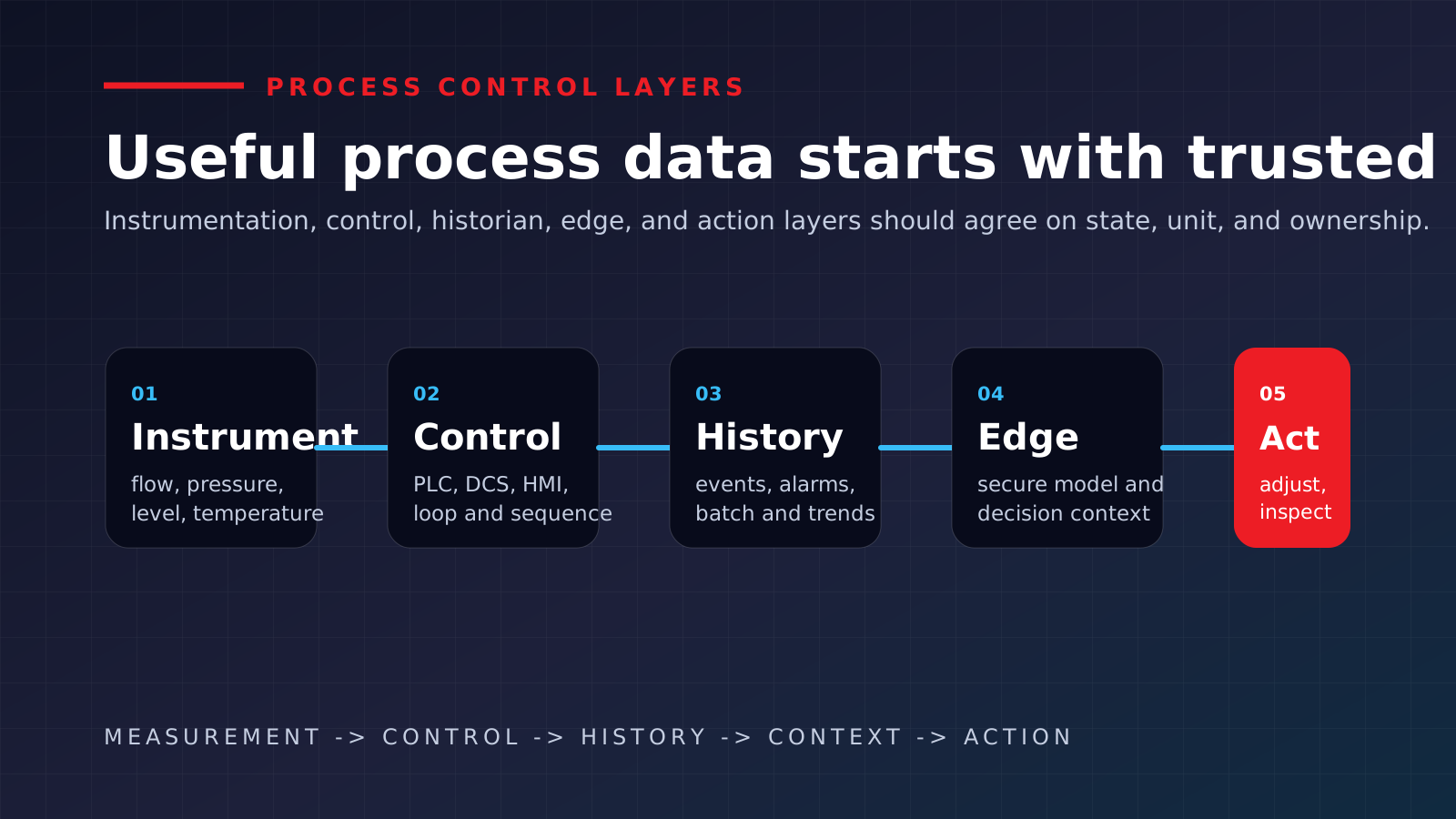
Process automation control layer diagram showing instrumentation, PLC or DCS, historian, edge, and action layers Industrial Automation

Process And Chemical Automation: Control, Visibility, And Safer Decision Workflows

A practical guide to automation and IIoT for process and chemical plants, focused on control reliability, alarms, instrumentation, maintenance, and operational visibility.
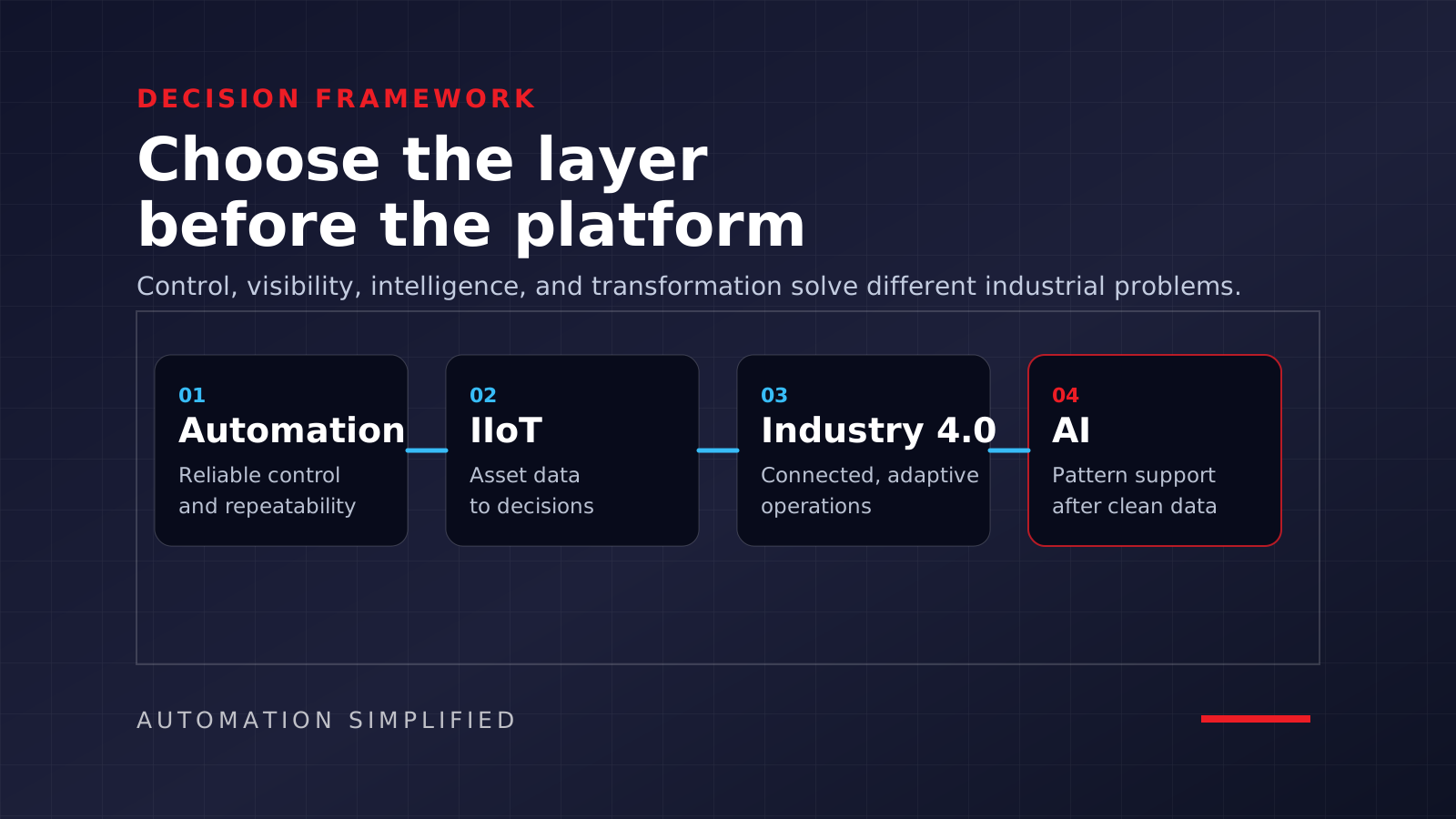
Decision framework separating industrial automation, IIoT, Industry 4.0, and AI as investment layers Industrial Automation

IoT, IIoT, Industry 4.0, And Industrial Automation: A Decision Framework For Industrial Leaders

A decision framework for industrial leaders who need to separate control, visibility, data, and transformation before committing capital.
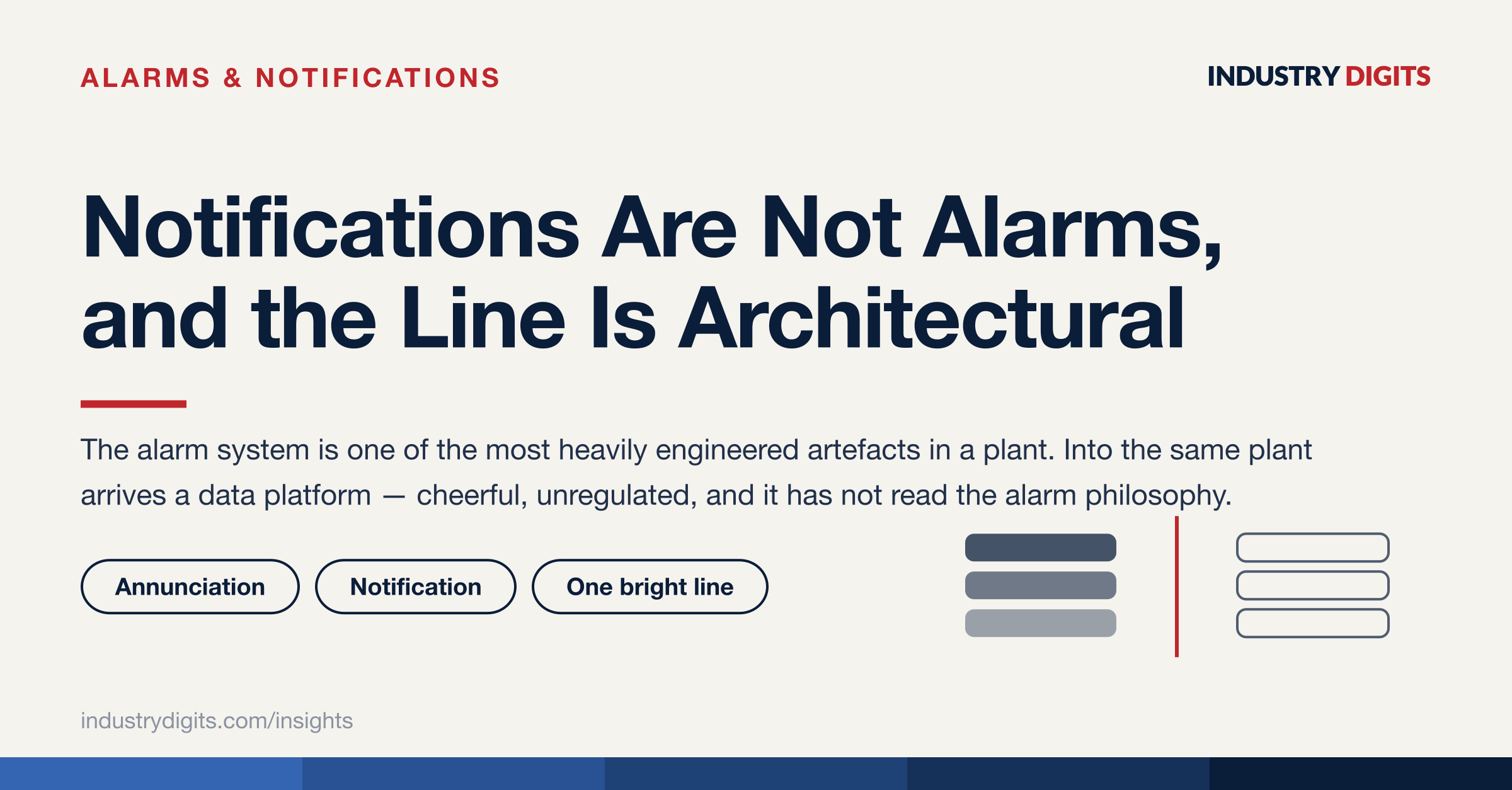
Article cover: Manual loops, backups, spare I/O — audits that can expose plant vulnerabilities. Industrial Automation

Manual Loops, Backups, Spare I/O: Audits That Can Expose Plant Vulnerabilities

Loops running in manual, a backup nobody has restored, and the spare channels in one I/O cabinet. Three diagnostics, one afternoon each, all measuring the distance between what your documentation claims and what your plant can prove.

Article cover: Two controllers, one UPS — why redundant hardware isn't a redundant service. Industrial Automation

Two Controllers, One UPS: Why Redundant Hardware Isn't a Redundant Service

Two controllers, two network paths, two I/O drops — and one shared UPS. Why redundant hardware doesn't create a redundant service, what both channels actually share, and the audit that finds it before the outage does.

Article cover: What unreadable PLC code costs you at 2 a.m. Industrial Automation

What Unreadable PLC Code Costs You at 2 A.M.

A contact named M0.0 tells a technician nothing when the line is down. What maintainable PLC code actually means — structure, naming, traceable constants — and a ten-minute drill that measures it better than any audit.

Ready to see what automation could do for your plant?

Discuss Your Project